

Pre-ALAPP MASTERCLASS
24 September 2026
New York City College of Technology, CUNY, New York, USA
Engaging Qualitatively with Institutional and Professional Discourse
Course Leader
Professor Srikant Sarangi, Aalborg University (Denmark) and Cardiff University (UK)
The aim of the Masterclass is to offer research-based conceptual, methodological and analytical insights into discourse analysis in institutional and professional settings such as health and social care, law, education, media and journalism, business and industry.
Language/communication-based studies — concerned with talk, text and other modalities (discourse, more generally) — have been carried out in the domains of professions and institutions/organisations over the past decades, both within quantitative and qualitative research paradigms. In the qualitative tradition, researchers adopt different methodological and analytical perspectives when engaging with talk data (e.g., workplace encounters, research interviews, focus groups) and text data (e.g., websites, media representations, emails, documents). Within what can be broadly captured as ‘theme-oriented discourse analysis’ (Roberts and Sarangi 2005), the Masterclass will be primarily devoted to ‘activity analysis’ (Sarangi 2010), which is distinctive in at least three ways: mapping of structural, interactional and thematic trajectories; relationality concerning focal themes and analytic themes; and role performance vis-à-vis participant structure and rhetorical devices. Additionally, attention will be given to ‘account analysis’, which orients to the rhetorical properties of language/communication data.
There are four parts to the Masterclass: (i) an overview of mainstream traditions of professional and institutional/organisational studies (Sarangi 2005; Sarangi and Candlin 2011); (ii) a summary of methodological and interpretive challenges facing the qualitative researcher (Sarangi 2007, 2019), with a focus on key analytical tools (Sarangi 2010); (iii) an exercise in sample data analysis; and (iv) a discussion of concerns arising from participants’ own research experiences.
The Masterclass is targeted at both early career and experienced researchers across disciplinary boundaries with an interest in qualitative inquiry.
Registration,determined by the venue: $50.
Deadline to register is September 4, 2026.
Key Readings
Roberts, C. and Sarangi, S. (2005) Theme-Oriented Discourse Analysis of medical encounters. Medical Education 39: 632-640.
Sarangi, S. (2005) The conditions and consequences of professional discourse studies. Journal of Applied Linguistics 2 (3): 371-394.
Sarangi, S. (2007) The anatomy of interpretation: Coming to terms with the analyst’s paradox in professional discourse studies. Text & Talk 27 (5/6): 567-584.
Sarangi, S. (2010) Practising discourse analysis in healthcare settings. In I. Bourgeault, R. DeVries and R. Dingwall (eds) The SAGE Handbook of Qualitative Methods in Health Research, 397-416. London: Sage.
Sarangi S. (2017) Editorial: En‘gaze’ment with Text and Talk. Text & Talk 37 (1): 1-23.
Sarangi, S. (2018) Communicative expertise: The mutation of expertise and expert systems in contemporary professional practice. Special Issue of Journal of Applied Linguistics and Professional Practice 13 (1-3): 371-392.
Sarangi, S. (2019) Communication research ethics and some paradoxes in qualitative inquiry. Journal of Applied Linguistics and Professional Practice 12 (1): 94-121.
Sarangi, S. (2024) Walking a tightrope: The ethical dilemma of rigour and/or relevance in interpretation-driven qualitative inquiry. Journal of Applied Linguistics and Professional Practice 18 (3): 343-370.
Sarangi, S. and Candlin, C. N. (2011) Professional and organisational practice: A discourse/communication perspective. In C. N. Candlin and S. Sarangi (eds) Handbook of Communication in Organisations and Professions, 3-58. Berlin: De Gruyter Mouton.
Sarangi, S. and Roberts, C. (1999) The dynamics of interactional and institutional orders in work-related settings. In S. Sarangi and C. Roberts (eds.) Talk, Work and Institutional Order: Discourse in Medical, Mediation and Management Settings, 1-57. Berlin: Mouton de Gruyter.
A fuller reading list and relevant PDFs will be distributed after the registration deadline.
COURSE LEADER: PROFESSOR SRIKANT SARANGI
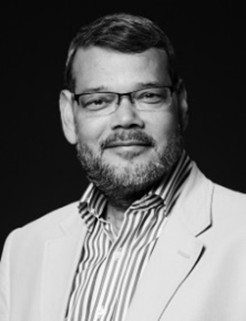
Srikant Sarangi is Adjunct Professor at Aalborg University, Denmark, where he was Professor in Humanities and Medicine and the Director of the Danish Institute of Humanities and Medicine (DIHM) between 2013 and 2021. He is also Emeritus Professor at Cardiff University, UK, where he was Professor in Language and Communication and Director of the Health Communication Research Centre between 1993 and 2013. More recently, during 2024-2025, he was Adjunct Professor at Universiti Teknologi Malaysia and during 2022-2023, he served as Visiting Chair Professor at the Hong Kong Polytechnic University and Adjunct Professor at Universiti Teknologi Malaysia. Over the years, he has been Adjunct Professor at Norwegian University of Science and Technology (NTNU), Norway (2017-2021); Visiting Professor at University of Jyväskylä, Finland (2017-2020); Visiting Professor at the College of Medicine, Qatar University (2017-2020); Visiting Professor under the Academic Icon scheme at University of Malay, Malaysia (2013-2015); Visiting Research Professor, Centre for the Humanities and Medicine, The University of Hong Kong (2013-2016); Adjunct Professor at NTNU, Norway (2009-2013); and Honorary Professor at Aalborg University, Denmark (2009-2014).
In 2012, he was awarded the title of ‘Fellow’ by the Academy of Social Sciences, UK. In 2015, he was elected as a ‘Foreign Member’ of The Finnish Society of Sciences and Letters (Societas Scientiarum Fennica).
His research interests include institutional and professional discourse from an applied linguistics perspective (e.g., health, social welfare, bureaucracy, education etc.); communication in genetic counselling, HIV/AIDS, telemedicine, primary care and palliative care; communication ethics; teaching and assessment of consulting and communication skills; language and identity in public life; intercultural pragmatics. He has held several project grants to study various aspects of health communication.
He is author and editor of twelve books, guest-editor of eleven journal special issues and has published more than 250 journal articles and book chapters. In addition, he has presented more than 1200 papers (including plenaries, keynotes, masterclasses and workshops) at international conferences and other forums. Since 1998 he is the editor of TEXT & TALK: An Interdisciplinary Journal of Language, Discourse and Communication Studies (formerly TEXT) as well as the founding editor, since 2004, of both Communication & Medicine and Journal of Applied Linguistics and Professional Practice (formerly Journal of Applied Linguistics). He is also general editor of the book series Studies in Communication in Organisations and Professions (SCOPE). He serves as an editorial board member for other journals and book series[es], and as a consulting advisor at many national and international levels.
Over the last twenty years, he has held visiting academic attachments in many parts of the world including: Australia, Brazil, Canada, Denmark, Finland, France, Germany, Hong Kong, India, Iran, Italy, Malaysia, Nepal, Norway, Portugal, South Africa, Spain, Sweden, Switzerland, Tanzania, UK and USA.